⚡ Key Takeaways
- Does Ground Coffee Spoil? Ground coffee rarely rots or spoils like perishable food, but exposure to oxygen causes delicate flavor oils to oxidize and turn flat or stale within 3 to 4 weeks.
- The 4 Enemies of Coffee: Oxygen, Moisture, Light, and Heat rapidly degrade aromatics and crema.
- The Best Storage Method: An opaque, vacuum-sealed or airtight container stored in a cool, dark pantry at room temperature (65°F–72°F).
- The Freezer Myth: Storing daily coffee in the freezer introduces moisture condensation every time you open the bag, stripping delicate coffee flavors.
Ground coffee does not go bad in a toxic or dangerous sense, but it begins losing its peak aromatic oils, sweetness, and crema within 3 to 4 weeks after opening if exposed to air. To maximize shelf life and preserve origin flavor notes, ground coffee should be stored in an airtight, UV-blocking container in a cool, dark pantry—never in a transparent jar on a sunny counter or inside a fluctuating refrigerator.
Few things are more disappointing than brewing a morning pot only to discover flat, cardboard-like coffee. Because grinding coffee multiplies the surface area exposed to oxygen by hundreds of times, understanding proper storage is the secret to making your specialty coffee taste fresh down to the very last scoop.
The 4 Enemies of Ground Coffee Freshness
“`
┌─────────────────────────────────────────────────────────────┐
│ THE 4 COFFEE FRESHNESS THREATS │
├───────────────────────────────┬─────────────────────────────┤
│ 💨 OXYGEN (Oxidation) │ 💧 MOISTURE (Humidity) │
│ Turns fragrant lipids rancid │ Causes premature extraction │
├───────────────────────────────┼─────────────────────────────┤
│ ☀️ LIGHT (UV Radiation) │ 🔥 HEAT (Thermal Breakdown) │
│ Breaks down flavor compounds │ Accelerates stale degassing │
└───────────────────────────────┴─────────────────────────────┘
“`
- Oxygen: The moment coffee is ground, it rapidly releases trapped carbon dioxide gas and begins absorbing ambient oxygen. This oxidation process turns delicate floral and caramel notes flat and bitter.
- Moisture: High humidity dissolves soluble coffee flavor compounds before brewing, creating stale or sour flavors.
- Light: Ultraviolet rays break down volatile aromatic chemical bonds in roasted coffee lipids.
- Heat: Warm temperatures speed up the rate of chemical decay and evaporation of essential oils.
Storage Comparison: Where Should You Keep Your Coffee?
| Storage Location | Freshness Retention | Pros & Cons |
|---|---|---|
| Airtight Pantry Canister | 3 to 4 Weeks (Peak) | Best Daily Method: Stable temp, zero condensation, blocks light |
| Original Bag with Clip | 1 to 2 Weeks | Acceptable if valve is sealed, but lets in ambient air each opening |
| Refrigerator | Poor (Under 1 Week) | Avoid: Coffee absorbs food odors and accumulates moisture |
| Deep Freezer (Unopened Bag) | 3 to 6 Months | Good for bulk long-term storage only if vacuum-sealed and unopened |
Why You Shouldn’t Put Daily Ground Coffee in the Freezer
A persistent myth suggests that putting your daily coffee bag in the freezer extends freshness. While commercial roasters use ultra-low temperature deep freezing for green beans or unopened vacuum-sealed bags, **freezing an open daily bag ruins coffee quality**.
Every time you take cold coffee out into a warm kitchen to scoop grounds, warm air hits the cold container, causing instant **water condensation** to form on the coffee particles. This condensation extracts aromatic oils and leaves your coffee soggy and stale.
📦 Small-Batch Roasting for Peak Freshness
Miko’s Java House coffees are precision air-roasted in small batches on a Loring S15 roaster and packaged in sealed 12oz boxes to lock in pristine aromatics from roaster to cup.
100% Specialty Arabica • Tested Mold & Yeast Free • Delivered Fresh
How to Tell If Your Ground Coffee Is Stale
- Loss of Aroma: Freshly opened specialty coffee fills the room with rich cocoa, nut, and fruit fragrance. If you smell almost nothing when opening the container, the volatile aromatics have evaporated.
- Absence of “Bloom”: When pouring hot water over fresh ground coffee in a pour-over or French press, it expands and bubbles vigorously with CO2. Stale coffee stays flat and lifeless.
- Flat, Cardboard Taste: Stale coffee loses its sweet acidity and complex tasting notes, leaving a dull, bitter aftertaste.
Frequently Asked Questions
Can old ground coffee make you sick?
As long as the grounds have remained completely dry with no mold growth, drinking old coffee is safe from a health perspective. However, it will taste flat, bitter, and lack any natural sweetness.
What is the best container for ground coffee?
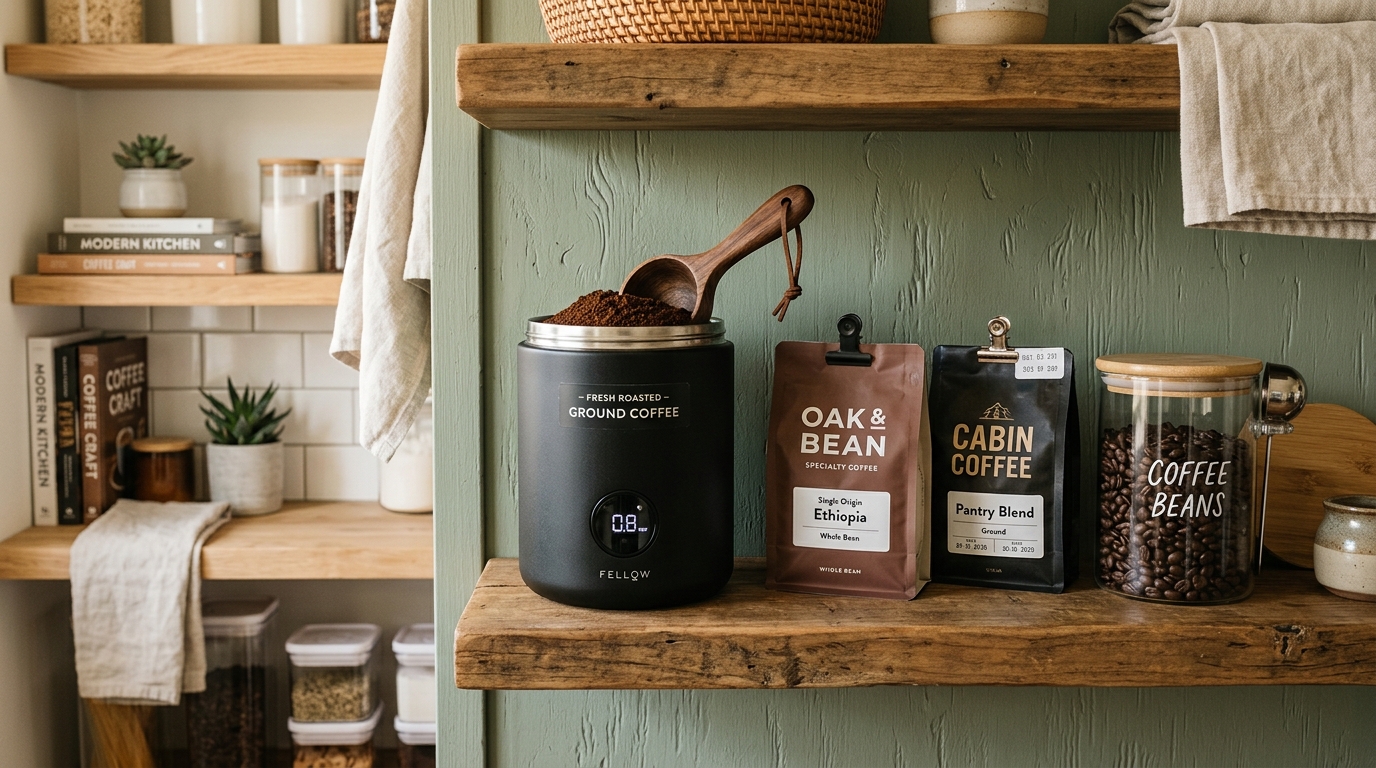
Look for stainless steel, ceramic, or tinted glass canisters equipped with a one-way CO2 degassing valve or an airtight silicone plunger lid (like the Fellow Atmos or Airscape).
How long is an unopened bag of specialty ground coffee good for?
An unopened, factory-sealed bag featuring a one-way freshness valve will maintain excellent quality for 6 to 9 months in a cool pantry.
Protect Every Cup
Specialty coffee is a craft agricultural product packed with natural essential oils and delicate antioxidants. By keeping your coffee sealed in an airtight, dark container at room temperature, you protect those precious flavor notes so every cup tastes as fresh as the day it was roasted.
Learn about the full specialty coffee landscape in our master guide: The Complete Guide to Specialty Ground Coffee: Roasts, Ratios & Brewing.